
Action Faction Blast Seven
Action Faction Sponsors: WOLVERINE
Progress Towards Next New Book Sent to Schools
$35/$50
Omicron 474 Accretion Perimeter
Commander Waller “Duke” Holt Commanding
“We’ve got life signs aboard Tae San.”
The words of Commander Holt’s bridge specialist were replaying themselves over and over again in his mind. It was the news everyone suspected but nobody expected. It was the first shoe to drop. Everything that took place afterwards would either be confirmation of the commander’s evidence and the CINC’s working theory about enemy forces having fired on a Skywatch capital ship from aboard a vessel they intended to destroy.
The preliminary forensics surrounding the wreck of destroyer hull DDG 198 were no longer in dispute. All the available observable evidence clearly showed all the energy from the attack originated inside the ship, likely somewhere near the port-side deflector capacitors. There were no visible weapons impacts. There were no electronic residuals. The debris created by the explosion all followed conventional uninterrupted tracks away from the detonation point. Sai Lore had turned the clock back almost to the moment the catastrophic ordnance went off. At this point, any theory to the contrary of that established by Holt’s team would have a mountain of data and observations to overcome, to say nothing of the basic physics.
The only remaining question was how the saboteurs escaped. No escape pods were detectable anywhere inside Sai Lore’s sensor envelope. Granted the singularity was doing a tremendous job of making electronic noise, but one of the benefits of a vessel equipped with Commander Holt’s deluxe “analyze anything” scanner package was that it could cut through both radiation and electronic noise even if one or both were at positively indescribable amplification levels. Hiding from Holt’s ship was practically impossible even with the correct equipment and enough time. Unless the attackers had completely changed the physical laws of the universe since the Achilles engagement, there was no choice but to take the situation at face value.
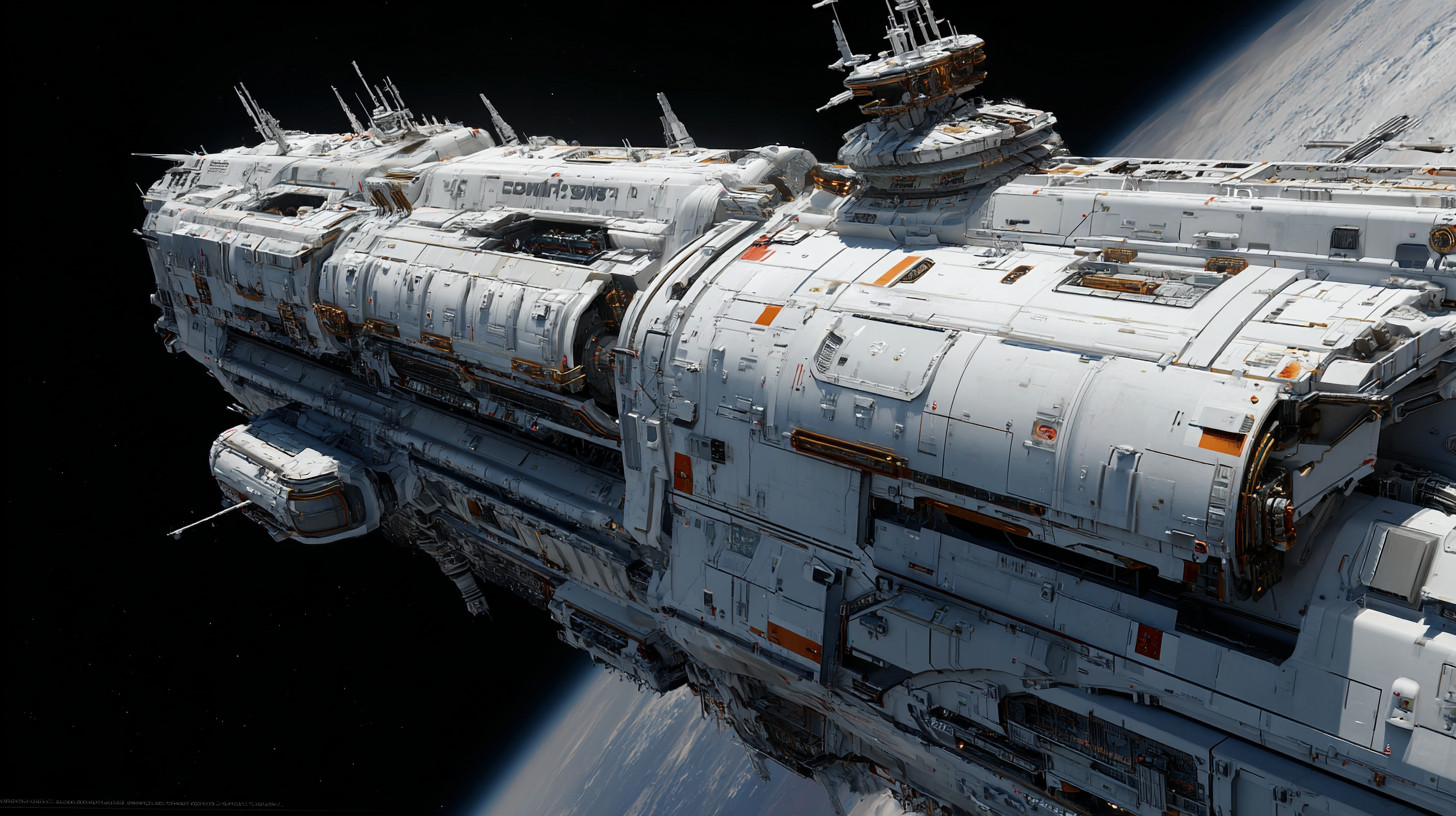
DSS Tae San had apparently become a weapon wielded by forces hostile to Skywatch, had fired on an Alliance capital ship without provocation and had disabled that ship’s engines effectively enough to subject it to the overwhelming gravity well of the Omicron singularity. Then while Argent tumbled towards her destruction, Tae San suffered an inexplicable detonation from inside her own hull despite the fact no enemy vessel had fired on her. Then she was left behind by Admiral Hafnetz, adrift in a decaying orbit around Omicron 474.
By the time Sai Lore arrived, the mangled ship had only 12 days left before she crossed the phenomenon’s event horizon never to return.
But someone was alive aboard Tae San. Sai Lore’s mission was no longer a salvage. Now it was a rescue. And if what Holt and his team turned out to be even partially true, the ramifications would send shockwaves across the Alliance. Up to now, the anti-alarmists had done a magnificent job concealing their members, their motives and any stray evidence of their activities.
An intact Tae San would undo it all in one devastating blow. It was this above all other considerations that set Holt’s crew on edge. Did anyone else know DDG 198 had been drifting out here with survivors before now? Was there a possibility they might show up to finish Tae San off? All these things needed to be considered and most of all, kept quiet, at least for now. Opening a priority frequency back to base and alerting everyone on the command net that the most famous casualty of the Achilles engagement both survived and contained survivors could be more disastrous than the original battle.
Tae San was roughly 20,000 tons of evidence, perfectly preserved in the vacuum of space and now apparently harboring witnesses to the original attack and everything that had happened in the Achilles formation from yet a third vantage point. What emerged now would be as conclusive as a battle damage assessment could possibly get. All the questions would be answered, and the commander was willing to let the evidence lead where it must.
All this new inspiration drove the crew of the Sai Lore to a common objective: a first-hand examination of Tae San and the immediate rescue of her survivors. The ship had to be secured and it had to be evaluated. Once the systems and control check produced a picture of operational capacity post-detonation, the last piece of the puzzle would fall into place. From there, it was a simple matter of presenting the evidence to a board of inquiry and filing charges against those responsible for the attack.
The ranking bridge officer had been left in command. Holt, the ship’s doctor and his three most senior specialists had outfitted themselves with extra-vehicular activity gear, portable decon, an angel autonomous medical unit and a heavier version of the standard Copernicus trundlebot designed for both wheeled and zero-gravity survey and analysis inside a damaged ship.
Trundlebots were important for a couple of reasons. One, they didn’t require life support, which was most important because any malfunctions couldn’t harm their protective suits. Secondly, trundlebots didn’t degrade in extreme conditions like radiation discharges, extreme heat or cold or exposure to hard vacuum. They could go places humans couldn’t, especially small cramped spaces. If they were obstructed they could often saw, burn or pry their way through, and the whole time they were in operation they could beam both visual data and telemetry back to whomever was in command of the landing party.
The tendency for most ship’s captains would be to deploy as many units as possible, but the commander knew from experience that whatever might be waiting for them aboard Tae San could not be predicted with any confidence. Trundlebots were small and numerous, but there was a finite supply. Having a half-dozen of them go through the hull at high velocity and end up as permanent residents in the debris field would foreclose on their use in the future. One at a time was therefore the standard policy unless there was an extremely good reason to deviate.
From Last Charge of the Defiant
Book One in the Advanced Starship Tactics Series
Progress Towards Next New Book Sent to Schools
$35/$50